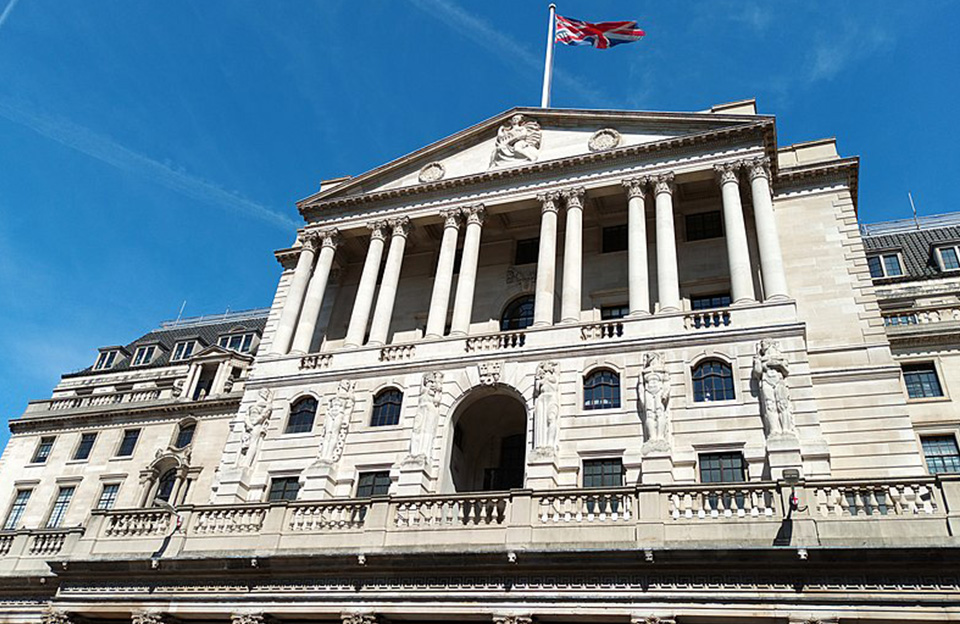
The Bank of England has once again come under fire for its decision to hold interest rates at 4.75%, a move many argue could have serious consequences for the UK economy. By failing to cut rates earlier this week, the Bank risks losing control of its monetary strategy, potentially resorting to reactive, incremental cuts to stave off recession or, worse, stagflation.
Lowering rates proactively, while the economy still has some resilience, is widely seen as a better approach than responding to signs of weakness. Yet the Monetary Policy Committee’s (MPC) decision to hold steady bucks the global trend, with other major central banks, including the US Federal Reserve and the European Central Bank (ECB), adopting more aggressive rate cuts to stimulate growth.
The ECB, for instance, has pledged further reductions, contributing to a widening gap between UK and German ten-year bond yields and pushing UK gilt yields to unsettling levels reminiscent of the Liz Truss era.
Divergent Views Within the Bank
Governor Andrew Bailey and five other MPC members defended their decision to maintain rates, citing concerns over inflation. In contrast, three members—Swati Dhingra, Dave Ramsden, and Alan Taylor—called for a modest 0.25% cut, arguing that the current rate is dampening business activity.
The Bank remains focused on inflation, worried that rising prices and wage growth could reignite upward pressure on costs. At the same time, it acknowledges that the UK economy has stagnated, revising its growth forecast for the final quarter down to zero. This leaves the Bank grappling with a tough choice: risk higher inflation or allow the economy to contract further.
The dissenters on the MPC argue that even a small rate cut could have bolstered business confidence and consumer sentiment, offering a much-needed economic lift. However, Bailey maintains that gradual reductions remain the best course of action amid heightened economic uncertainty.
A Difficult Balancing Act
Much of this uncertainty stems from recent government policies, including significant tax increases introduced by Chancellor Rachel Reeves. These measures have dampened both business activity and consumer confidence, further complicating the Bank’s decision-making process.
Critics argue that the Bank has become overly preoccupied with inflation at the expense of broader economic health. HSBC economists, for example, suggest that November’s uptick in inflation was primarily due to higher petrol and tobacco duties rather than underlying wage pressures, which are now easing.
The Bank’s mandate is clear: to achieve a 2% inflation target while supporting growth and employment. By failing to take decisive action, it has arguably fallen short of this mission.
Mandelson’s Diplomatic Challenge in the US
In a separate development, Lord Mandelson, the UK’s newly appointed Ambassador to the US, faces a high-stakes challenge in securing a crucial free trade agreement with the country. Mandelson, a seasoned political operator, is well-placed to navigate the complexities of Washington D.C. and Mar-a-Lago, despite his past criticisms of President-elect Trump.
Trump has indicated a willingness to expand trade with the UK significantly, suggesting volumes could increase three to five times their current levels. Mandelson’s task will be to turn this rhetoric into tangible outcomes, negotiating terms that benefit both sides while avoiding potential pitfalls in the process.
Time will tell whether Mandelson can rise to the occasion and secure a deal that strengthens the UK’s position in the global economy.